Proposals built to win, not to document capability
Most B2B proposals fail before the evaluation committee reads page two. Not because the capability is weak, but because the document is structured as a capability list rather than a persuasive argument. The evaluator reads a description of what you can do and must infer the specific case for why you are the right choice for their specific situation.
We write B2B proposals structured around the evaluator perspective. We start from the selection criteria and work backwards, building an argument that demonstrates understanding of the client situation, presents the specific differentiation relevant to their requirements, and sequences the credibility evidence where it is most needed -- not in a fixed template order.
For international tender responses and RFPs, we add a layer of cultural calibration. The weight placed on different evaluation criteria varies significantly across markets -- German procurement teams evaluate vendor stability differently than US buyers, and French public sector procurement has specific structural expectations that generic templates ignore.
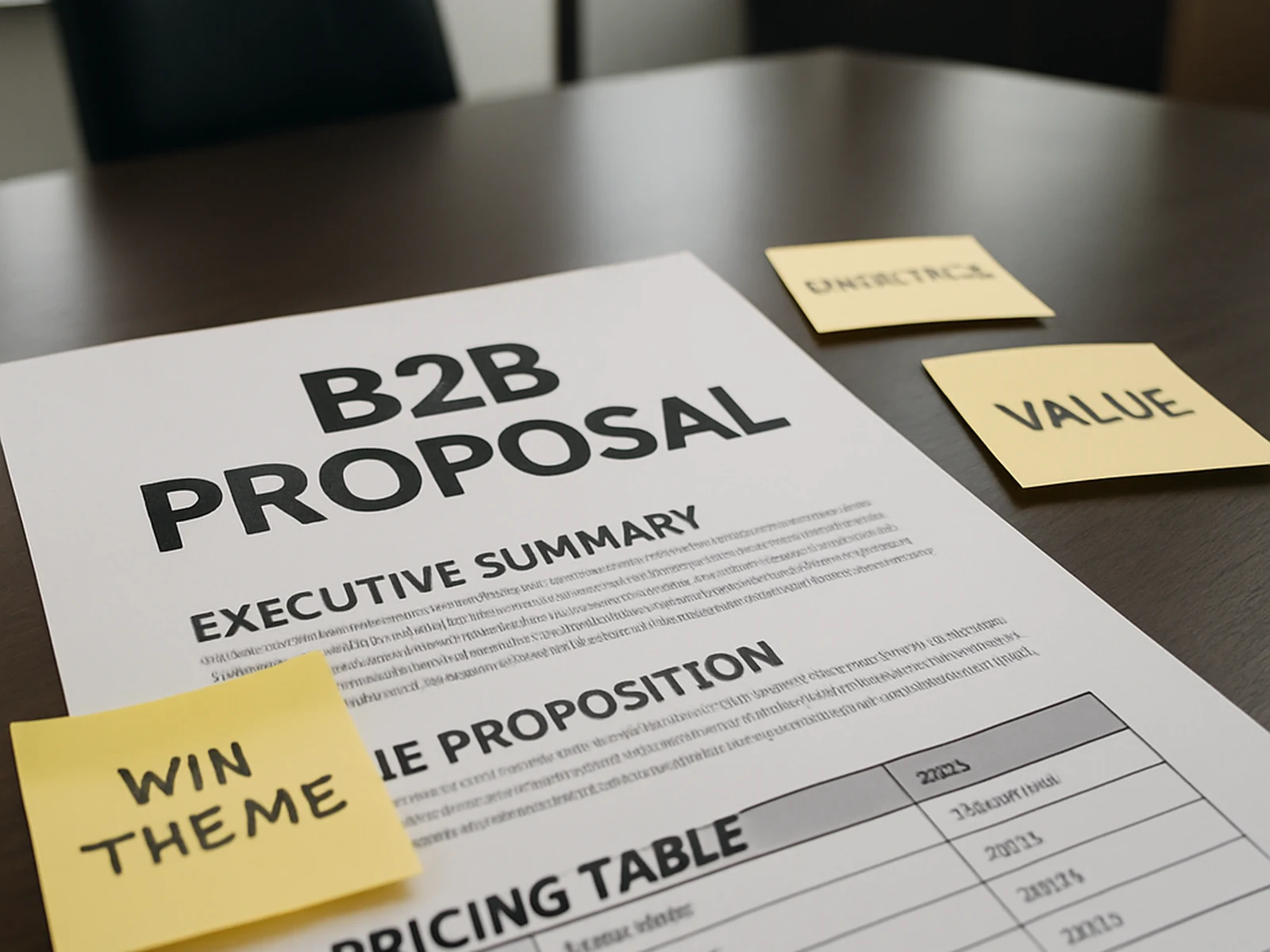
Every proposal includes a win theme: a central argument thread that runs through every section and gives the evaluator a clear, memorable reason to choose you. Without a win theme, proposals read as a collection of answers to questions rather than a case being argued.
- RFP and tender responses
- Unsolicited capability proposals
- Shortlist presentation scripts
- Win theme development
- Executive summary optimisation
- Market-specific version for cross-border tenders
What we need from you
For RFP responses, we need the full tender documents and your win strategy before briefing. We need to understand what you know about the client, which competitors are likely to respond, and what your team believes is your strongest competitive differentiator for this specific opportunity.
For unsolicited proposals, the brief is more open and the discovery session is longer. We spend time establishing the specific business case before we begin writing.