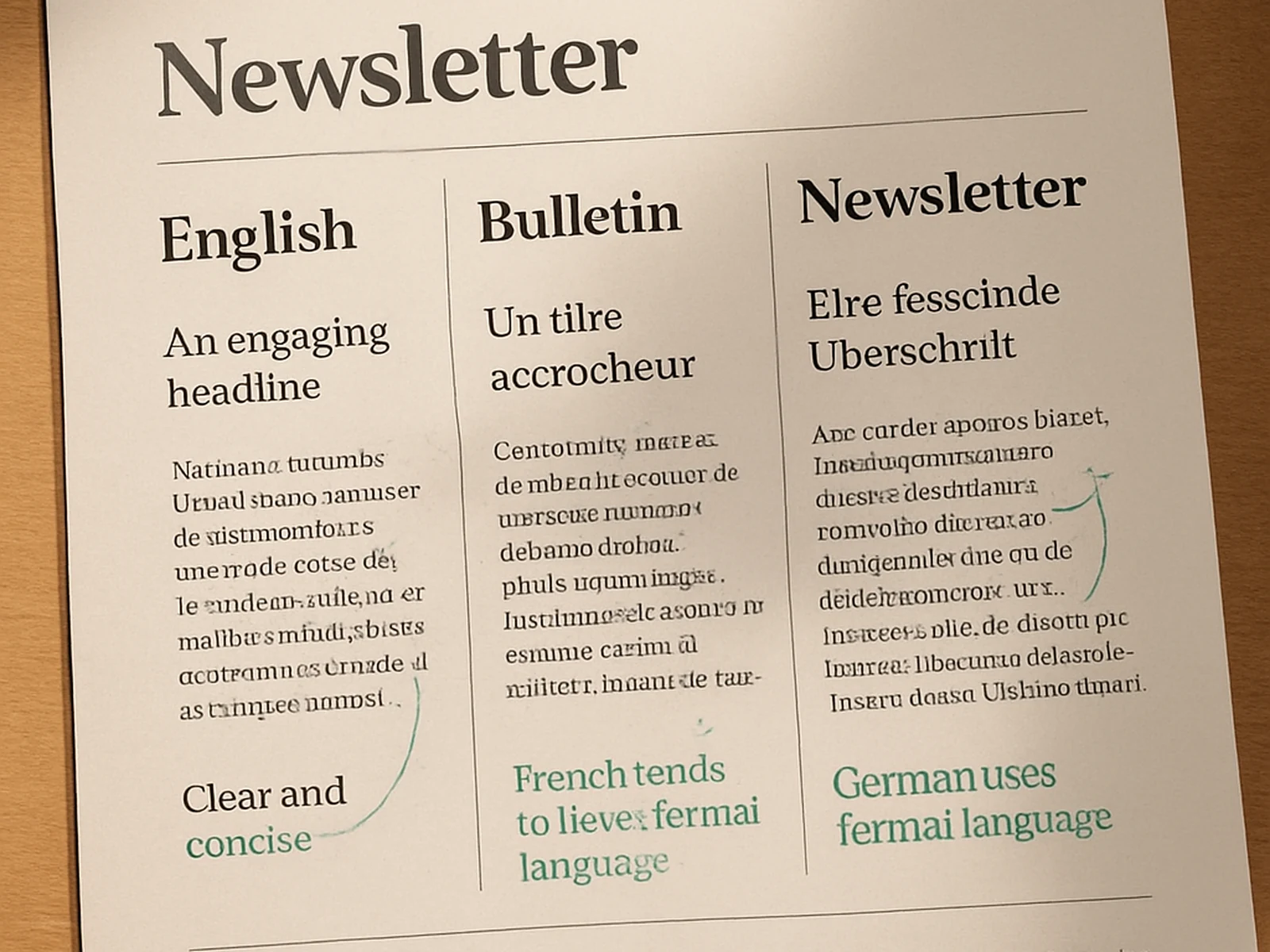
Not translation. Reconstruction.
The most common mistake in international copywriting is treating translation and adaptation as the same thing. Translation converts words. Adaptation rebuilds the argument for a different audience, culture, and buyer psychology.
When we adapt copy for a new language market, we begin with the same research we do for original copy: who is the buyer in this specific market, what competing messages do they already encounter, what assumptions about your category do they hold that buyers in your original market do not, and which elements of your original argument require reframing for the local context.
The deliverable is not a translated version of your existing copy. It is a market-specific argument that reaches the same conclusion as your original -- that your offer is the right choice -- via a different route appropriate for the cultural and commercial context.
Every adapted piece arrives annotated. The annotations explain specific word choices made for cultural resonance, phrases avoided because they carry unintended connotations in the target market, and structural decisions made to match local buyer decision processes. These notes are as valuable as the copy itself -- they allow your team to adapt the copy for other purposes without accidentally breaking the logic.
- Single language pair or multiple pairs per brief
- Research phase per market
- Cultural annotation on every deliverable
- Buyer psychology brief for each territory
- Back-translation verification available
- Format-ready for websites, print, or ads
Which markets we have adapted for
Our primary output languages are English and French. For other language markets, we develop the strategic argument, full English copy, and a comprehensive cultural brief, then work with certified native-language partners for the language-specific output. Quality control on all language versions is retained by us.
We have delivered adaptations for: French-speaking markets (France, Belgium, Quebec), German-speaking markets, Italian, Spanish, Portuguese, Japanese, and Brazilian Portuguese. Each market requires specific research and cannot be handled with generic localization rules.